

Reduce Chargebacks with Identity Verification
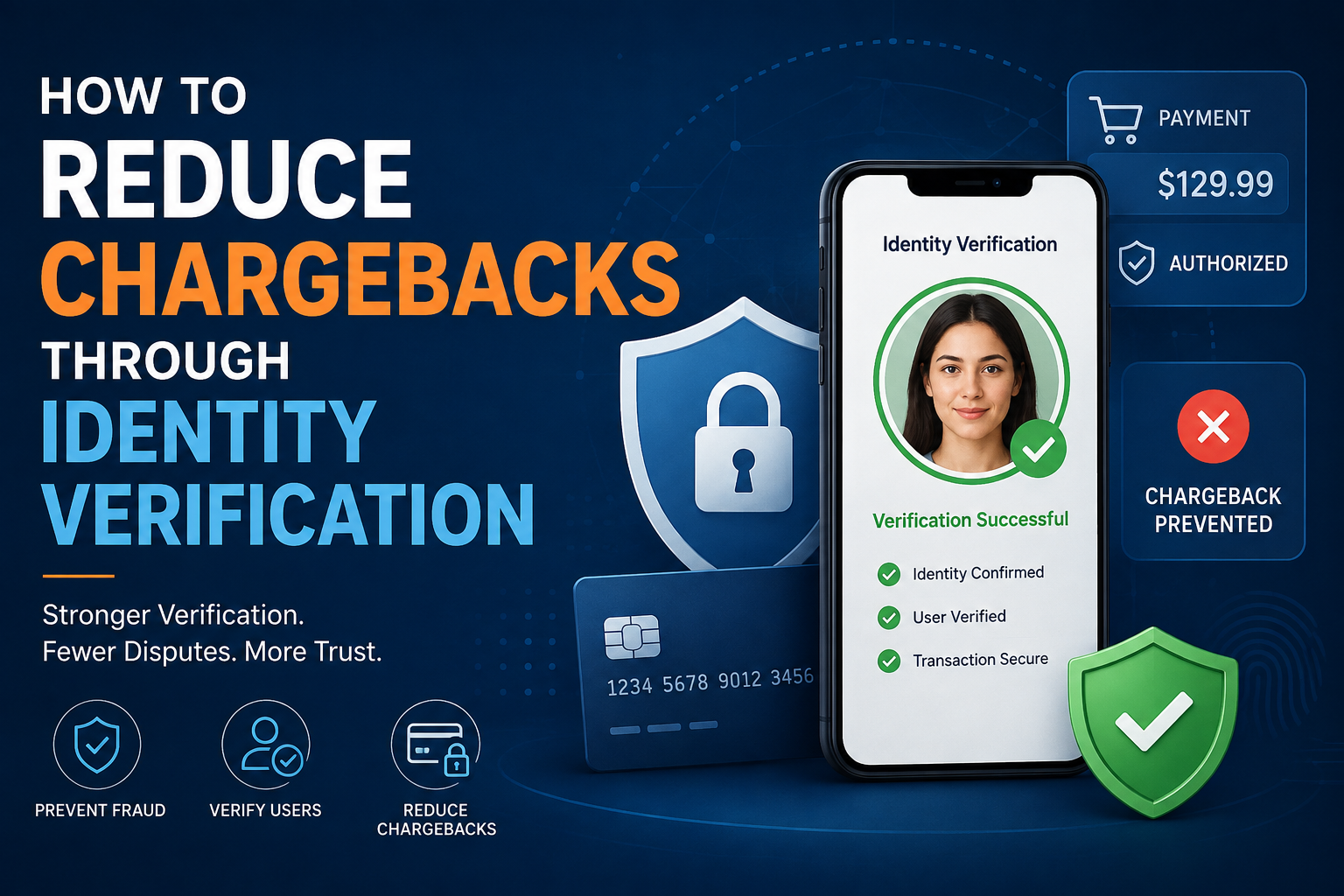
Chargebacks are becoming a growing concern for digital businesses. As more purchases, subscriptions, and services move online, businesses have less opportunity to physically confirm who is making a transaction. This creates room for stolen identities, account takeovers, payment fraud, and disputes over legitimate purchases.
The scale of the problem is significant. Mastercard estimates that global chargeback volume will reach 324 million transactions annually by 2028, a 24% increase from 2025. The total cost of chargebacks is also expected to rise from $33.79 billion in 2025 to $41.69 billion by 2028.
For subscription services, marketplaces, SaaS platforms, streaming services, and other digital businesses, preventing these disputes starts before a payment is completed. Stronger identity verification for payments can help businesses establish greater confidence in who is accessing an account, making a purchase, or subscribing to a service.
A chargeback occurs when a cardholder disputes a transaction with their bank or card issuer and the payment is reversed. The reasons can range from genuine unauthorized transactions to misunderstandings, account misuse, and deliberate abuse of the dispute process.
Not every chargeback is fraudulent. Customers may fail to recognize a merchant name on their bank statement, forget about a recurring subscription, or dispute a transaction because they believe someone else used their account.
At the same time, genuine fraud remains a major concern. Mastercard's 2025 research found that merchants identify approximately 45% of their chargebacks as fraudulent, combining first-party and third-party fraud.
This makes chargeback prevention more complicated than simply blocking suspicious payments. Businesses need to understand the person behind the transaction and the context in which it takes place.
Traditional payment security focuses heavily on the payment itself. Businesses may check card details, CVV, IP addresses, device information, or transaction patterns. These controls remain important, but they do not always answer a fundamental question:
Is the person making the transaction actually the person they claim to be?
Identity verification adds another layer of confidence by connecting an account to a verified individual.
Depending on the platform and risk level, verification may involve an identity document, facial biometrics, liveness detection, email or phone verification, or a combination of these methods.
This becomes particularly useful when businesses need to distinguish between a legitimate customer and someone using stolen credentials or a compromised account.
The first opportunity to reduce fraud is during account creation.
A fraudster can create an account using stolen personal information, disposable contact details, or synthetic identities and then use that account to make fraudulent purchases. If verification happens only after suspicious activity occurs, the business may already have experienced financial losses.
A stronger onboarding process can verify important information before customers gain access to higher-risk features.
For example, a digital platform could request:
The goal isn't necessarily to make every customer complete a lengthy verification process. Instead, businesses can use risk-based verification to determine when additional checks are appropriate.
Identity verification doesn't have to happen only during registration.
A customer who has successfully created an account may later become a target for account takeover. If a fraudster obtains the customer's password, they could potentially change account details, add a new payment method, purchase expensive products, or start a subscription.
This is where step-up verification can make a difference.
Businesses can trigger an additional identity check when a transaction or account action appears unusual. Examples include:
Instead of applying the same level of friction to every customer, businesses can increase verification requirements when risk increases.
This approach helps maintain a smoother experience for legitimate users while creating additional barriers for fraudsters.
Subscription-based businesses face a particular challenge because transactions repeat over time.
A customer may initially make a legitimate payment but later dispute a recurring charge because they no longer recognize the subscription, forgot to cancel it, or believe someone else used their account.
Clear billing communication is therefore an important part of chargeback prevention.
Identity verification can strengthen this process by creating a clearer connection between the verified account holder and the subscription. When a customer has completed identity checks and continues to access the service from the same verified account, the business has stronger evidence about account ownership.
However, identity verification should not be treated as a replacement for transparent subscription practices. Businesses should also provide clear renewal notifications, recognizable billing descriptors, easy cancellation options, and accessible customer support.
This is especially important because Mastercard reports that 48% of consumers have disputed at least one charge that they later realized was legitimate.
In other words, not every dispute is caused by criminal activity. Some can be prevented by making legitimate transactions easier for customers to recognize.
Account takeover is another important link between identity verification and chargebacks.
Imagine a customer has an account containing saved payment information. A fraudster obtains the customer's login credentials and gains access to the account. The fraudster can then make purchases that appear to come from an established customer.
Basic payment checks may not immediately identify the problem because the card and account information can appear legitimate.
Additional identity verification can help detect this type of activity.
For example, a platform might request biometric verification when a user attempts to change their password, add a new payment method, or make an unusually expensive purchase.
If the person cannot successfully complete the verification, the platform can pause the transaction and investigate before the payment is processed.
No single security method can eliminate chargebacks.
The strongest approach combines identity verification with other fraud signals. This can include device intelligence, transaction monitoring, behavioral analysis, payment verification, and customer history.
For example, consider a customer who has used the same account and device for six months. They suddenly log in from a new location, change their password, add a new card, and attempt a high-value purchase.
Each signal might appear manageable individually. Together, however, they create a much stronger indication of potential account takeover.
An effective system can respond by requesting additional identity verification rather than automatically declining the customer.
This is important because excessive fraud controls can also hurt legitimate customers. The objective isn't simply to block more transactions; it is to reduce chargebacks while allowing genuine customers to complete legitimate purchases.
Businesses sometimes treat identity verification as a complete fraud solution. In practice, it works best as one component of a broader payment security strategy.
A mature approach can combine:
This layered approach provides businesses with more evidence before, during, and after a transaction.
Security is important, but so is the customer experience.
If every customer is asked to upload documents and complete multiple verification steps for a low-risk purchase, the additional friction may result in abandoned transactions.
A better strategy is to make verification proportional to risk.
Low-risk users can experience a simple verification flow, while high-risk transactions can trigger stronger checks such as document verification and biometric authentication.
Modern identity verification can also happen quickly. For example, a customer may be able to scan an identity document and complete a liveness check from a smartphone without manually entering extensive personal information.
The objective should be simple: verify more when the risk is higher and minimize unnecessary friction when the risk is low.
Businesses should measure whether their verification strategy is actually improving payment performance.
Important metrics include chargeback rate, fraudulent transaction rate, account takeover incidents, verification completion rate, false-positive declines, and customer abandonment during verification.
Businesses can also compare these metrics before and after implementing identity verification.
For example, if stronger verification reduces fraudulent transactions but causes a significant increase in abandoned checkouts, the verification flow may be too restrictive. Conversely, if verification reduces fraud without materially affecting conversion, it may be providing a strong balance between security and customer experience.
The goal should therefore be measured in terms of risk reduction and transaction confidence, rather than simply the number of users who complete verification.
Identity verification can play an important role in modern chargeback prevention, particularly for businesses operating digital accounts, subscriptions, marketplaces, and online payment services.
The most effective strategy is not to verify every customer in exactly the same way. Instead, businesses should use a risk-based approach that combines identity checks with transaction monitoring, payment controls, and behavioral signals.
By verifying users at important points in the customer journey, businesses can make it harder for fraudsters to create accounts, misuse legitimate accounts, or complete suspicious transactions.
As digital payments continue to grow and global chargeback volumes are projected to reach 324 million transactions by 2028, establishing greater confidence in the person behind each transaction is becoming increasingly important.
Ultimately, identity verification for payments is not just a fraud-control measure. When implemented thoughtfully, it can help businesses protect revenue, strengthen customer trust, and create a more reliable digital payment experience.